- What the Caravanserai Does Best (Sogdiana)
- Snow Meets Rime (Imperial Tibet)
- Peony (Tang-era Chang'an)
- Lost and Found (Abbasid Caliphate)
- Drum, Lute, and Harp (Oasis kingdom of Kucha)
- Starborn (Oasis kingdom of Khotan)
Showing posts with label flash fiction. Show all posts
Showing posts with label flash fiction. Show all posts
Wednesday, 23 May 2012
Lives of Spice Series
This is a preliminary story listing for my flash fiction series about the Silk Road, Lives of Spice. There isn't a fixed schedule for when I'm uploading each entry, but I'm confident that the current list will be able to showcase just how diverse the cultures of the Silk Road. More will come!

Sunday, 20 May 2012
Lives of Spice
I'm not a professional novelist, although I love stories. I've enjoyed reading about myths and legends since my teens and writing has always been my hobby since I was a kid. After completing my MA at SOAS, one lasting thing I've taken away aside from my degree is a fascination about silk road history.
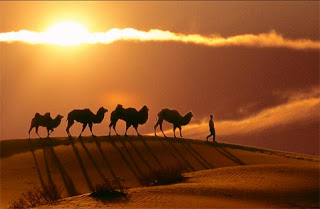
The Silk Road is a generalised catchphrase given to the many, many landlocked routes that spanned Eurasia for thousands of years, reaching a decline with the rise of the littoral, naval powers in the 18th century and falling into its current impoverishment and cultural decimation at the hands of modernity. These silk routes were diverse - at the height of the Han Dynasty (206 BCE - 220 CE), Rome served as the western terminus of trade - a truly extraordinary distance, even if neither empire was really aware of each other's existence. By the Tang era (618 - 907), the eastern terminus shifted from Luoyang to Chang'an (Xi'an), and traded freely with Byzantium, Damascus, and Baghdad, centres of the Eastern Roman Empire, the Umayyad, and Abbasid Caliphates respectively. All the while, an extraordinary conglomeration of other powers, such as the Persian dynasties, the Indian kingdoms of South Asia, and the Tibetans contributed their arts, crafts, and cultures to the silk routes flowing between China and the rest of Eurasia.
Central to the survival of these routes were the Central Eurasians - a lamentably underrated and stereotyped people who have found expression in many different cultures, from the Jurchen peoples to the Huns, Sogdians, Mongols, Uighurs, Turks, and others who were "peripheral" to the great sedentary empires. They were the main facilitators of Eurasian history, having imparted not only the horse but also the wheel, writing, and many other inventions to the sedentary powers. They also survived by trade, and their activities in Eurasia ensured the survival of the silk routes for over two millennia.
I'm starting a series of flash fiction (stories of less than one thousand words - it sounds short but it's actually very appropriate for online platforms) called Lives of Spice on this blog. This series is about people that lived along the timeless silk routes. From a Kuchean courtesan to a Chinese official, from a Tibetan soldier to an Arab writer astride his camels to a sculptor from the oasis kingdom of Khotan and a Turkic princess, Lives of Spice is my light exploration into the relationships, dramas, and affections of medieval Eurasia. If you happen to read some of this flash fiction, thank you for checking it out and I hope you enjoy it.

Central to the survival of these routes were the Central Eurasians - a lamentably underrated and stereotyped people who have found expression in many different cultures, from the Jurchen peoples to the Huns, Sogdians, Mongols, Uighurs, Turks, and others who were "peripheral" to the great sedentary empires. They were the main facilitators of Eurasian history, having imparted not only the horse but also the wheel, writing, and many other inventions to the sedentary powers. They also survived by trade, and their activities in Eurasia ensured the survival of the silk routes for over two millennia.
I'm starting a series of flash fiction (stories of less than one thousand words - it sounds short but it's actually very appropriate for online platforms) called Lives of Spice on this blog. This series is about people that lived along the timeless silk routes. From a Kuchean courtesan to a Chinese official, from a Tibetan soldier to an Arab writer astride his camels to a sculptor from the oasis kingdom of Khotan and a Turkic princess, Lives of Spice is my light exploration into the relationships, dramas, and affections of medieval Eurasia. If you happen to read some of this flash fiction, thank you for checking it out and I hope you enjoy it.
Subscribe to:
Posts (Atom)